


Toyota Hybrid vs Gas
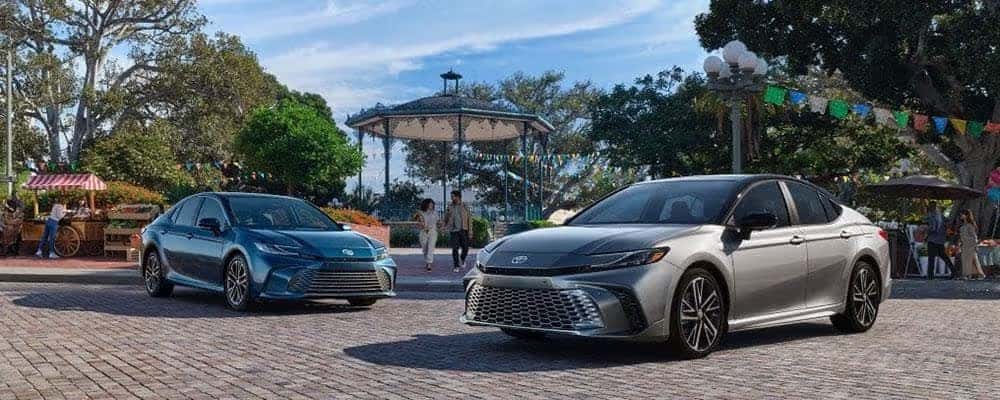
Deciding between a Toyota hybrid vs gas model usually comes down to one question: does the fuel savings actually outweigh the higher sticker price? The honest answer is that it depends on how much you drive and what kind of driving you do. This page runs the real numbers on purchase price, fuel costs over five years, break-even mileage, and resale value so buyers in Albany, Cordele, Tifton, Americus, Leesburg, Sylvester, and Dawson can make the call based on their own driving instead of a general assumption.
The Price Premium: What Hybrid Costs Up Front
Across most of the Toyota lineup, the hybrid version of a given model carries a higher starting price than its gas counterpart, typically in the range of one to three thousand dollars depending on the model and trim. On a RAV4 or Camry, that gap is fairly modest. On models where the hybrid is standard equipment, like the Sienna or the current Camry lineup, there’s no premium to calculate at all because there’s no gas-only version to compare against.
That premium is the number every other calculation works against. If you never recover it through fuel savings before you sell the vehicle, the gas model was the cheaper choice. If you recover it in year two, the hybrid wins by a wide margin over a typical ownership period.
Real-World Fuel Costs Over Five Years
Here’s where the comparison gets concrete. Take a driver covering 15,000 miles per year. A gas Toyota SUV averaging around 30 mpg combined burns roughly 500 gallons annually. The hybrid version averaging around 40 mpg burns about 375 gallons. At $3.00 per gallon, that’s a difference of roughly $375 a year, or about $1,875 over five years.
Push that to 25,000 miles a year, which isn’t unusual for someone commuting between Albany and Tifton or covering a rural sales territory, and the annual gap grows to more than $600. Over five years, that’s north of $3,000 in fuel alone, comfortably clearing the price premium with room to spare.
Now flip it. A driver covering 8,000 miles a year saves around $200 annually. Over five years, that’s $1,000, which may not fully recover the premium. For low-mileage drivers, the financial case for hybrid is genuinely weaker.
Why South Georgia Driving Favors Hybrids More Than You’d Think
Hybrid efficiency isn’t uniform across all driving. Toyota hybrids recover energy under braking and run on electric power at low speeds, which means they perform best in stop-and-go conditions. That’s the opposite of a conventional gas engine, which is most efficient at steady highway speeds.
For local driving around Albany, running errands, school pickups, and city routes, the hybrid advantage is at its largest. On a long, flat highway run to Macon or Tallahassee, the gap narrows considerably. Most South Georgia drivers do a mix of both, which is why real-world hybrid savings here tend to land closer to the EPA combined figure than the highway figure.
One more local factor: summer heat means air conditioning runs constantly. A hybrid’s ability to power the climate system without idling the engine at stops is a small but real advantage during an Albany July.
Break-Even Analysis: When Does the Hybrid Pay Off?
The simple version: divide the price premium by your annual fuel savings, and that’s how many years until you break even.
- High-mileage drivers (20,000+ miles per year) – Break-even often lands inside two to three years. Everything after that is savings.
- Average drivers (12,000 to 15,000 miles per year) – Break-even typically falls in the three to five year range. If you keep vehicles long term, the hybrid comes out ahead.
- Low-mileage drivers (under 10,000 miles per year) – Break-even may stretch past five years. The gas model is often the better financial choice, though resale value can still tip the scales.
Fuel prices move this math significantly. Every increase at the pump shortens the break-even window, which is part of why hybrids look better in hindsight than they do on a spreadsheet built at today’s prices.
Resale Value and Long-Term Ownership
Toyota hybrids have held their value unusually well, and that resale strength is the piece most break-even calculations leave out. When you sell or trade a hybrid, you often recover a larger share of the original price than you would with the equivalent gas model, effectively shrinking the premium you paid.
Battery longevity, once the main hesitation for buyers, has largely stopped being a practical concern. Toyota’s hybrid battery coverage extends well beyond the standard warranty terms, and high-mileage hybrids routinely reach 200,000 miles on original batteries. If you’re weighing hybrid ownership costs, our Toyota hybrid service page covers what maintenance actually looks like over the long run, and it’s generally lighter than owners expect since regenerative braking reduces brake wear substantially.
Tax Incentives and Other Factors
Standard hybrids typically don’t qualify for federal clean vehicle tax credits, which apply mainly to plug-in hybrids and full electric vehicles that meet specific requirements. If you’re considering a Toyota plug-in hybrid, it’s worth checking current eligibility, since those rules change and the credit amount can meaningfully shift the math.
Beyond fuel and taxes, a few things buyers weigh: hybrids run quieter at low speeds, deliver instant low-end torque that makes city driving feel responsive, and produce fewer emissions. Gas models, meanwhile, can offer higher towing capacity in some configurations and a lower entry price for buyers whose priority is the smallest possible monthly payment.
So Which One Should You Buy?
Go hybrid if you drive more than 15,000 miles a year, do significant city and stop-and-go driving, plan to keep the vehicle five years or longer, or want the resale advantage. Go gas if your annual mileage is low, you want the lowest possible purchase price, or you need a configuration where the gas model offers capability the hybrid doesn’t.
There’s no wrong answer here. There’s a right answer for your specific driving, and it usually becomes obvious once you put your actual annual mileage into the calculation.
Why Choose Hutchinson Toyota of Albany
We stock both hybrid and gas models across the Toyota lineup so you can drive them back to back rather than deciding from a spec sheet. Our team will run the break-even numbers with you using your real mileage and commute, and tell you honestly when the gas model is the smarter buy.
Backed by the Hutchinson Advantage, we work with buyers throughout Albany, Cordele, Tifton, Americus, Leesburg, Sylvester, Dawson, and South Georgia to match the right powertrain to the right driver.
Not sure whether hybrid or gas fits your driving? Come compare them side by side at Hutchinson Toyota of Albany.